
VERY RARE Palmyrene Bust Fragment Roman Imperial Period 2nd-3rd Century AD
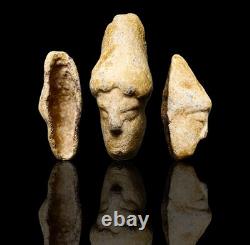




Palmyrene Lead Bust Fragment Roman Imperial Period 2nd-3rd Century AD. Authentic ancient lead sculptural fragment, accompanied by a Certificate of Authenticity and Provenance. Object: Sculptural bust fragment Culture: Palmyrene Date: c. 2nd-3rd century AD Material: Lead (PB) Height: approx.
42 mm Type: Funerary relief fragment. Description: This cast lead fragment represents the head and upper bust of a Palmyrene figure, produced in the distinctive funerary tradition associated with Palmyra during the Roman Imperial period. The face is rendered in a stylized and schematic manner, with simplified facial planes, shallow modeling, and an emphasis on symbolic presence rather than individualized portraiture, all hallmarks of Palmyrene funerary representation. Lead examples of Palmyrene sculpture are significantly rarer than stone or terracotta counterparts and are believed to reflect specialized workshop production or alternative funerary practices. Such objects may have served as secondary loculus markers, votive elements, or symbolic commemorative inserts within burial contexts. The compact scale and fragmentary condition indicate this piece originally formed part of a larger funerary relief or assemblage. The surface exhibits consistent ancient oxidation, pitting, and burial accretions characteristic of archaeological lead artifacts. The reverse and lateral surfaces are minimally finished, consistent with architectural or embedded placement rather than display in the round. Palmyrene funerary art flourished between the 1st and 3rd centuries AD, reflecting a hybrid visual language combining Roman imperial influence with long-established Near Eastern symbolic traditions. This fragment preserves that distinctive aesthetic in a rare metallic medium. Authentication: The material composition, corrosion pattern, casting technique, and stylistic features are consistent with documented Roman-period Palmyrene lead sculpture and relief fragments. The piece shows no indications of modern manufacture or alteration.Ancient fragment with expected losses, surface wear, and oxidation.